
How Market Logic Works.
Price movements are based on simple mechanics. To start reading charts with confidence and take your first steps toward profitability, all you need to do is master the fundamental principles.
How exactly does a trader make money?
You enter into a contract (open a trade) based on where the price will be after a set period of time (for example, in a couple of minutes). If your analysis was correct and the price moved in the right direction, you receive a profit from the payout.
Three Market Conditions
Uptrend (rising): The price is moving upward. However, no asset rises in a straight line—buyers take breaks (“corrections”) along the way to allow the market to gather strength before a new surge.
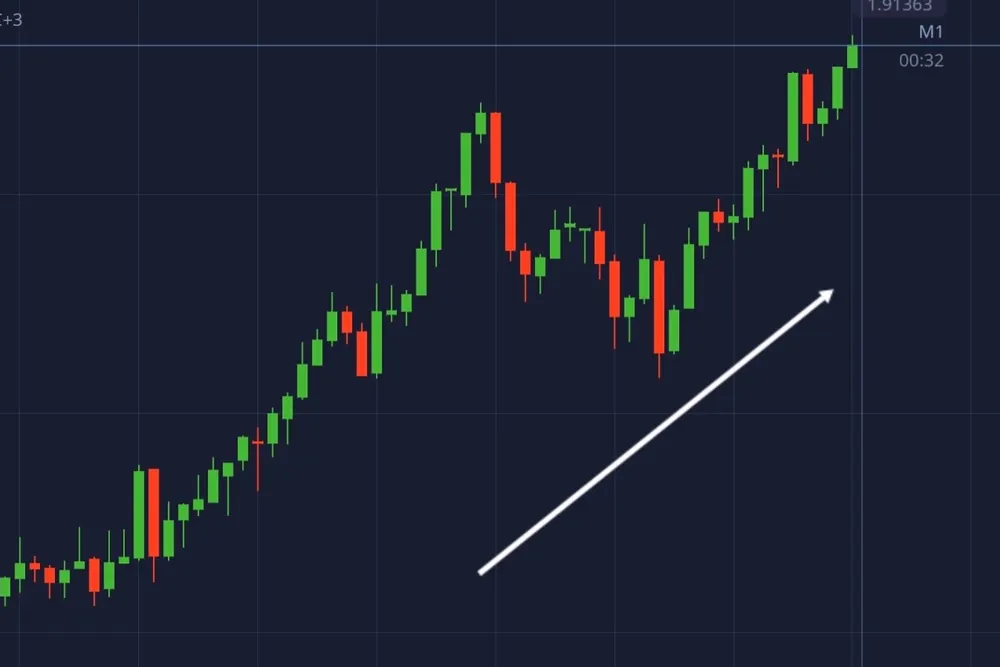 Bullish trend
Downtrend (decline): A downward movement. As with an uptrend, the decline occurs in stages, with temporary pauses and minor rebounds.
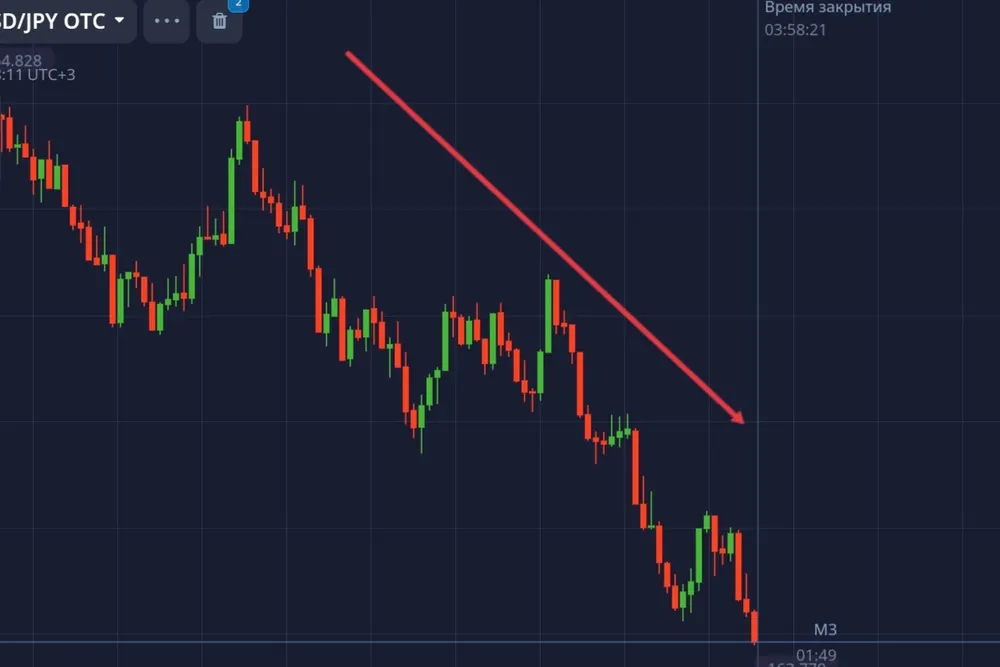 Bear Market
Sideways movement (flat or range-bound): The market is in a pause. The price is “trapped” within a range between the upper and lower boundaries and moves from one end to the other, building up volume ahead of the next breakout.
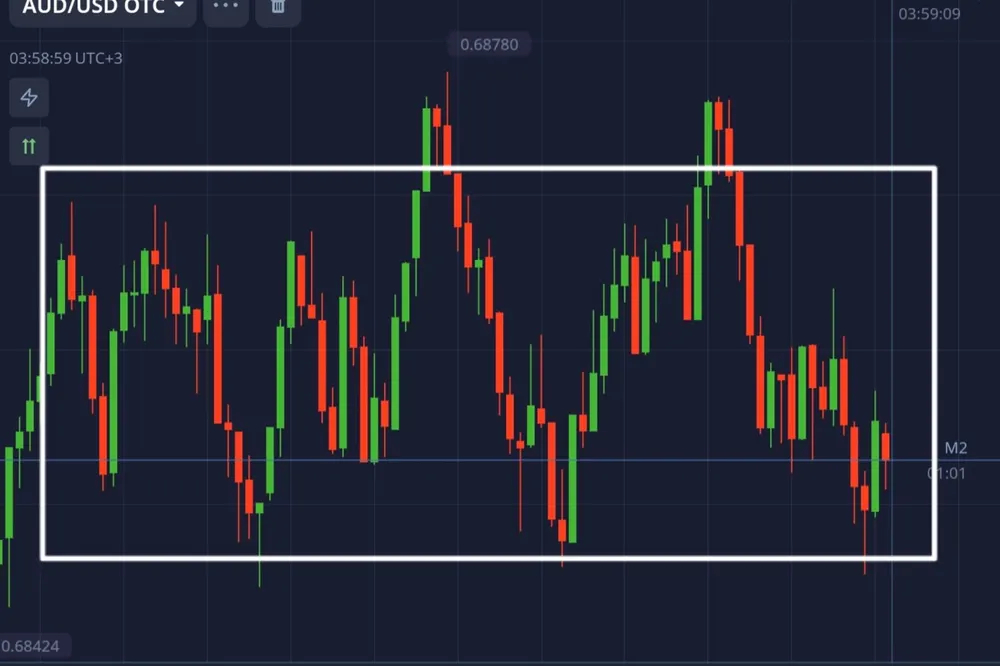 Side panel
A Two-Step Algorithm for Graph Analysis
- Assessing the Big Picture: First, look at the chart on a larger time frame to understand the overall direction (where the majority of traders are heading). It’s always safer to trade with the trend.
- Finding an entry point: Switch to a more detailed chart. Identify key areas where the price has repeatedly bounced off, and wait for the best moment to open a trade.
A common mistake made by beginners is to clutter the entire screen with dozens of indicators. As a result, the signals start to contradict each other, and the chart turns into a mess.
Keep the schedule clear
To open a trade, you need 2 to 4 clear reasons (for example: the overall trend is upward + the price has reached a support level + the volume indicator confirms buyer interest).
Where to Start Right Now
Don't try to risk your money right away. Open any chart and spend some time practicing: try to visually identify trends, sideways ranges, and key price levels. A couple of days of this practice will give you a real understanding of market logic much better than dry theory.